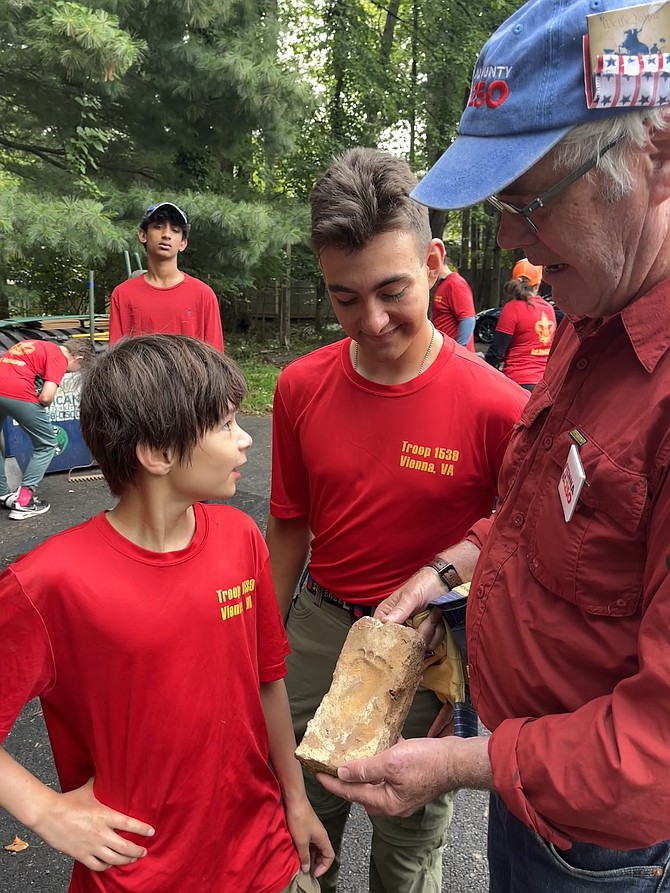
Chuck Anderson, Vienna250 co-chair and Vienna town councilmember, shows two Scouts of Troop 1539 in Vienna the pressed footprint of an infant centered in the clay before the 18th-century brick was sun-dried in wooden forms and then fired in a kiln.
A dark, damp, overgrown corner hidden behind a blue trash dumpster in a church parking lot became a portal to a complex history born in early America more than 250 years ago.
On June 6, Scouts and families from Troop 1539 in Vienna gathered at the site for their second time this spring, joining Assistant Scoutmaster Thomas Remmers for their final swing at a monumental task: removing, stacking, cleaning, and cataloging approximately two tons of remaining chimney bricks from Moorefield, the historic 18th-century home of Jeremiah Moore that was dismantled in 2017. Moore’s 600-acre estate once spanned the area between today’s Nottoway Park and the Vienna/Fairfax-GMU Metro station.
“While the two-day project was a significant community service effort, it quickly transformed into a profound, emotional lesson in American history for all involved, bringing the physical artifacts of an enslaved legacy into the light,” said Tyler McCarty, Troop 1539 Eagle Scout
Local leadership joining the Scouts' recovery team included Chuck Anderson, Vienna250 co-chair and Vienna town councilmember; Tracy McCarty, Vienna250 co-chair; Cynthia Griffiths, chief communications officer for Scouting America’s National Capital Area Council; and Andrew Yu of the Chinese Christian Church of Virginia which purchased the property of the former Vienna Baptist Church in December 2025.
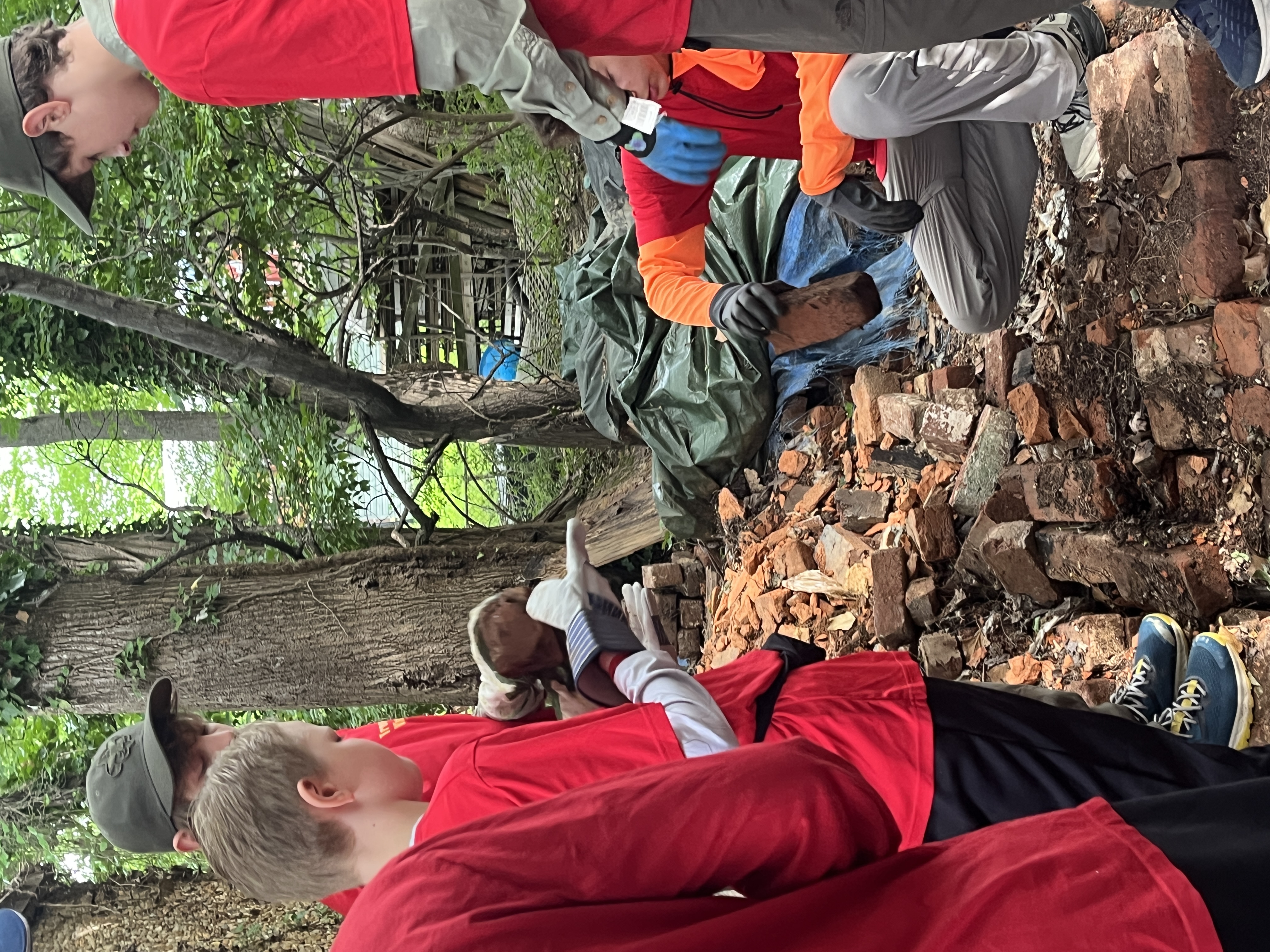 The Scouts realize the lower rows of bricks have sunk into soft soil and will have to be shoveled out.
Dispersed History, Found Again
Anderson explained to The Connection that Jeremiah Moore (1746–1815) was a Revolutionary War veteran, farmer, slaveholder and (itinerant) Baptist evangelist who advocated for the separation of church and state. According to Anderson, Moore was associated with Patrick Henry, who defended him in court after Moore was jailed for preaching without a license.
Moore also influenced George Mason. Inspired by Moore's case and the local movement, Mason drafted the Fairfax County Resolves in 1774 and later expanded the concepts into the Virginia Declaration of Rights (1776).
According to the Virginia Department of Historic Resources, the Town of Vienna acquired Moore’s vernacular farmhouse in 1975. The property was added to the Virginia Landmarks Register on Sept. 20, 1977, and listed on the National Register of Historic Places on April 19, 1978. After falling into severe disrepair, the home was methodically dismantled in 2017 and subsequently delisted from the registers.
For more than two decades, the home’s pieces were forgotten and lost to time. The trail went cold until a recent social media post by the Vienna250 committee, Anderson said.
"Our town public information officer put out a posting on Facebook with old pictures of the Moorefield house, saying it had been lost," Anderson explained. "A guy basically responded and said, 'No, it hasn't. I know where the boards are.'"
The wooden boards had been loaded into a truck and driven to Madison County. That tip led town staff to a resident who had been paying storage fees for the lumber. At that same meeting, former Fairfax City Mayor David Meyer revealed the location of the forgotten chimney bricks, which had been left behind at the Vienna Baptist Church (now the Chinese Christian Church of Virginia). With the materials located, the physical labor began.
‘My Child Did Exist’
Scouts worked to move the heavy, 250-year-old bricks onto pallets for town storage. But these weren't just ordinary building materials.
"One of the most remarkable things is these bricks were all made by hand, most likely by enslaved people," Anderson said. "Jeremiah Moore was a slaveholder. In the process, there would often be indentations of the fingerprints of the people who picked them up when the clay was still wet. You can put your hands in the fingerprints of someone from over 250 years ago."
Anderson held a brick in his hands. Pressed into the clay was the distinct, perfectly centered footprint of an infant. He noted that a second, different child's footprint was also discovered during the cleanup. "Finding the bricks with the children's footprints reminded me of some of the negative history of our country, since their parents were probably enslaved," said Tyler McCarty, Troop 1539 Eagle Scout.
Because these prints were placed on the flat face of the bricks, they would have been completely hidden from view once the chimney was built. Their placement suggests a deeply moving act of love and resistance.
"These footprints never would have been seen once the brick had been essentially used," Anderson said. "The only explanation is it was probably the mother or father of an enslaved child saying, 'I want the future to see the signature of my child. My child did exist and was real.' And they left them for us to discover."
Living Citizenship
For Troop 1539's leadership, the discoveries bridged the gap between community service and historical consciousness.
"The Boy Scouts of Scouting America is really built on service and teaching character and citizenship," said Thomas Remmers, Troop 1539 assistant scoutmaster. "What better way to teach citizenship than through service projects? This one is fantastic because not only do we get to give back, but we get to learn about the history of our community and the citizenship that happened right here in Vienna, as it relates to the founding of our nation."
The ultimate goal for the salvaged materials is ambitious. Anderson said if funding can be secured through grants and foundations, organizers hope to completely rebuild Moorefield, dedicated to religious freedom and the separation of church and state, thus preserving the legacy of Jeremiah Moore and the deeply personal, indelible marks of the families Moore enslaved.
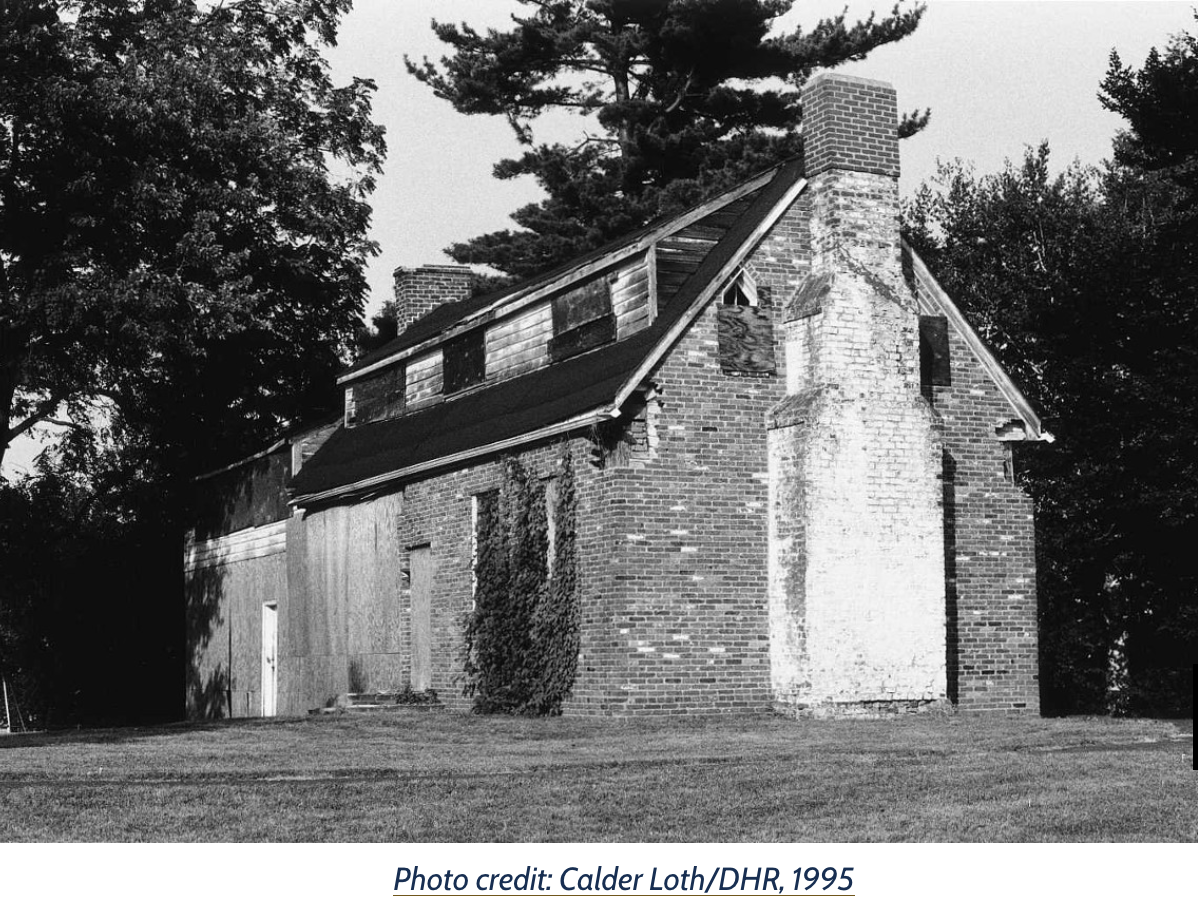 Moorefield in the 1950s: the addition of a brick veneer exterior over the original wood-frame siding changed its look from a rustic farmhouse.